
Upgrading the clearance of dual ports in South China
2026-07-20
In July 2026, South China's foreign trade logistics will enter a window of heavy policy dividends. The new cross-border trade facilitation policy of Guangzhou Customs has been officially implemented, and Foshan has been included in the core pilot scope for the first time; Shenzhen Yantian Port has simultaneously implemented a new innovative mode of LCL supervision. The reform of the two major ports will be mutually linked, focusing on the pain points of traditional industrial foreign trade shipments. Targeted solutions will be provided to address the slow customs clearance, inspection delays, and difficulties in shipping hazardous chemicals for the manufacturing industry in Guangfo, as well as the high costs of LCL inspection and modification at Yantian Port. This will provide efficient, stable, and low-cost overseas logistics solutions for traditional foreign trade factories, import and export enterprises, and freight forwarding companies in South China.
On July 9th, Guangzhou Customs officially released a complete set of optimization measures for cross-border trade facilitation in 2026, with a total of 33 reform measures. The biggest breakthrough in this upgrade is that Foshan has been included in the pilot system for the first time, completely filling the gaps in local customs clearance of the Guangzhou Foshan manufacturing cluster. In response to the advantageous industries of automobile manufacturing, high-tech, fine chemicals, beauty care, and precision instruments in the Guangfo region, the customs has set up seven specialized customs clearance express lines, covering seven major industrial categories including high-tech goods, complete vehicles and auto parts, cosmetics, scientific research materials, integrated circuits, new energy equipment, and hazardous chemicals. The system implements classified supervision and priority release mechanism to accurately adapt to the shipment needs of bulk industrial goods, high-value precision goods, and special supervision goods.

In response to the long-standing problem of hazardous chemicals and precision integrated circuit goods being detained during port inspections in the industry, the new policy has implemented a white list appointment system for factory inspections of enterprises. After the white list of compliant and high-quality enterprises is filed, they can apply for customs on-site inspection without the need to transfer the goods to the port yard for centralized verification, thus avoiding problems such as secondary loading and unloading of goods, yard retention, damage and loss at the root. At the same time, relying on the advantages of the Guangfo inland port, we will comprehensively promote the "One Port Connection" and "Water Water Multimodal Transport" models. Goods can complete the full set of customs clearance procedures at the Foshan inland branch port and directly connect to the Nansha port to connect with international routes, greatly shortening the shipping chain of inland factories and effectively reducing the shipping risks caused by port congestion and peak season closures.
In addition, Guangzhou and Foshan ports have comprehensively simplified the traditional export inspection process, implemented convenient models such as paperless declaration, timely inspection, and two-step declaration, streamlined the document circulation process, and compressed the overall customs clearance time. For the massive traditional manufacturing enterprises in Guangfo, simplifying the customs clearance process not only improves shipping efficiency, but also effectively reduces hidden logistics costs such as trailer transportation, port storage, and demurrage. This makes the logistics model of local shipment and port direct delivery more competitive, and also creates exclusive local logistics advantages for local freight forwarding enterprises.
At the same time, Shenzhen Yantian Port has launched a new regulatory model for traditional LCL business, completely revolutionizing the industry's long-standing inspection pain points. In traditional LCL operations, multiple shipments of general cargo are mixed in the same container. As long as a single shipment is selected for inspection, the entire container must be unloaded for verification, which can easily delay the shipping schedule, incur high allocation fees, warehouse rent, and container rental, causing unnecessary economic losses and delivery delay risks to the enterprise.
The newly implemented inspection before packing supervision scheme in Yantian Port puts the inspection process before the packing operation. All LCL cargo shall first enter the dedicated supervision site for comprehensive verification, and after inspection, they shall be uniformly packed, sealed, and loaded onto the ship, completely eliminating the common industry problem of "single ticket inspection and full container delay". After the implementation of the new model, the overall inspection efficiency of port LCL has increased by 50%, and the comprehensive logistics cost of enterprise LCL has decreased by 30%, greatly improving the stability of general cargo, general cargo, and small batch multi batch industrial LCL shipments, perfectly adapting to the traditional foreign trade LCL shipment needs.
According to the latest port data, the container throughput of Yantian Port reached 8.3459 million TEUs in the first half of 2026, a year-on-year increase of 10%. With efficient port operation capabilities and continuously optimized regulatory policies, it has become a core hub port for traditional foreign trade bulk cargo, LCL, and FCL exports in South China. Its routes cover major global trunk routes, and its cabin stability and shipping schedule timeliness continue to lead South China ports.
At present, it is the peak season for global shipping, with tight cabin space, fluctuating freight rates, and stricter port inspections on routes in Europe, America, the Middle East, and Southeast Asia. The uncertainty of foreign trade shipments has significantly increased. The new customs clearance policy in Guangfo, combined with the LCL reform in Yantian Port, has established a complete logistics chain in southern China that combines efficient customs clearance in inland areas with stable shipments from coastal hubs. It covers all categories of shipments, including FCL, LCL, hazardous chemicals, and high-value precision goods.
As a professional freight forwarder deeply involved in South China ports, we integrate full chain resources such as FCL, LCL, and multimodal transport, and can provide standardized one-stop sea freight logistics services for foreign trade factories. Combining the latest port clearance rules with the peak season shipping market, we can customize suitable overseas transportation plans based on the type of goods and shipping time requirements, helping enterprises simplify logistics docking processes, stabilize shipping rhythms, and reasonably control logistics costs, calmly cope with various shipping fluctuations during the peak season of shipping, and ensure efficient and secure shipment of goods.
END
Disclaimer: The content of this article is for reading reference only, and the specific results are subject to relevant regulations and local administrative authorities' judgments. If there are any dynamic adjustments, please refer to the official explanations and releases of domestic and foreign regulatory agencies. If there is any infringement or question about copyright, please contact us by email admin@mbs-gz.com We will delete it as soon as possible, thank you.
Recent news
View all news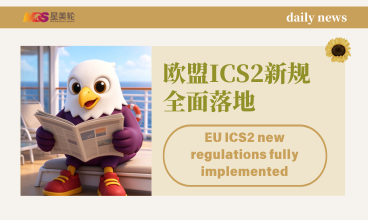
EU ICS2 new regulations fully implemented
The EU’s second-generation Import Control System (ICS2) will be fully and mandatorily implemented on September 30, 2026.
Learn more> >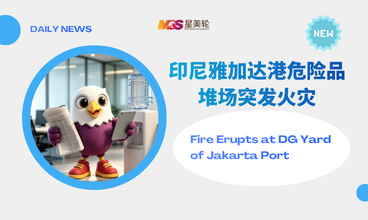
Fire Erupts at DG Yard of Jakarta Port
Fire at Jakarta Port DG Yard, 52 Containers Damaged
Learn more> >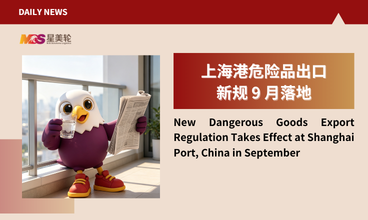
New Dangerous Goods Export Regulation Takes Effect at Shanghai Port, China in September
The new maritime inspection rule for dangerous goods exports is firstly enforced at Waigaoqiao Terminal of Shanghai Port, China. The audit basis shifts from UN code verification to full cargo name filing.
Learn more> >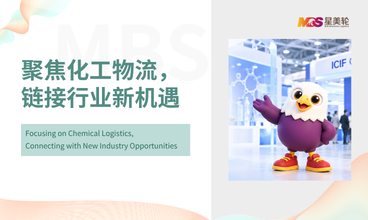
MBS丨Focusing on Chemical Logistics, Connecting with New Industry Opportunities
MBS participated in the 23rd China International Chemical Industry Fair (ICIF China 2026).
Learn more> >Consultation & Suggestions
If you have logistics consulting or cooperation intention, please leave your message here,
or put forward your valuable comments or suggestions, we will contact you at the first time.