
Analysis of Key Updates in GHS Revision 11
2025-11-19
On September 12, 2025, the United Nations officially released the 11th Revised Edition of the Globally Harmonized System of Classification and Labelling of Chemicals (GHS). As a crucial update to the GHS since its initial launch in 2003, this revision covers significant improvements across multiple technical fields including classification criteria, precautionary statements, and labeling specifications, aiming to enhance the scientific rigor and standardization of global chemical management.

I.Systematic Optimization of Classification Criteria
1.Reconstruction of the Classification System for Aerosols and Pressurized Chemicals
The new edition of GHS has comprehensively sorted out the definitions of aerosols and pressurized chemicals, clarifying their independent classification statuses. Specific updates include:
Clarification of Definition Scope
- Aerosols are no longer classified under traditional hazard categories such as flammable gases and flammable liquids.
- A separate classification system is established for pressurized chemicals, forming a parallel relationship with aerosols.
- Hazard assessment for both types of products must be conducted independently based on the characteristics of their contents.
Refinement of Classification Criteria

New direct classification conditions are added:
- Aerosols with flammable components exceeding 1% without testing are directly classified as Category 1.
- Aerosols with a heat of combustion ≥ 20 kJ/g are automatically categorized into Category 1.
- A three-level classification system is established, with clear boundaries for determining each category.
2.Comprehensive Upgrade of Skin Sensitization Assessment Methods
Establishment of a Hierarchical Assessment System
- Priority is given to substance classification data as the basis for assessment.
- The bridging principle is introduced to address data gaps.
- Concentration limits are set as the final basis for assessment.
Addition of Four New Assessment Methods

Assessment methods include:
- Human data: Can be directly used for mixture classification.
- Standard animal data: Its limitations must be considered.
- Restricted methods: Applicability needs to be verified in advance.
- Non-standalone chemical/in vitro methods: Serve as auxiliary basis for judgment.
3.Expansion of Environmental Hazard Categories
Restructuring of Atmospheric System Hazard Classification
- "Ozone Layer Depleting" is expanded to "Atmospheric System Hazarding".
- A new independent category of "Hazardous due to Contributing to Global Warming" is added.
- The two types of hazards coexist independently and are not subordinate to each other.
Unification of Classification Criteria

Judgment basis:
- Based on substances listed in the annexes to the Montreal Protocol.
- Mixtures containing relevant substances with a concentration ≥ 0.1% shall be classified.
- Corresponding to hazard codes H420 and H421 respectively.
II.Systematic Improvement of Precautionary Statements
1.Optimization of the Corresponding Relationship Between Precautionary Codes and Hazard Categories
Major Adjustments
- The precautionary statement for Acute Toxicity - Inhalation Category 3 is changed from P261 to P260.
- Precautionary measures for categories related to Specific Target Organ Toxicity are updated simultaneously.
- Two new clauses (P322 and P323) dedicated to therapeutic instructions are added.
Specification of Precautionary Statements

New requirements:
- Safety Data Sheets (SDS) must include detailed therapeutic guidelines.
- Training requirements and operational specifications are clearly defined.
- Comprehensive emergency response procedures are provided.
2.Strengthening of the Emergency Guidance System
Streamlining of Combined Statements
- Combined statements such as P302+P317 and P304+P317 are deleted.
- The hierarchical structure of emergency response is optimized.
- Priorities for emergency disposal are clarified.
Clarification of Operational Guidelines

Specific requirements:
- Immediate water rinsing is mandatory upon skin contact.
- Individuals exposed via inhalation shall be quickly moved to a well-ventilated area.
- A time window is reserved for professional medical intervention.
III.Enhanced Standardization of Labeling Specifications
1.Standardization of Label Element Display
- Coordination between transport labels and GHS pictograms is achieved.
- Rules for display priority when they coexist are clarified.
- Duplicate marking of the same hazard information can be avoided.
- Unified specifications for size ratios are established.
Unification of Terminology System

Key changes:
- "Transport pictograms" are uniformly revised to "transport labels".
- Requirements for label elements on inner packaging are clarified.
- Standards for transport markings on outer packaging are standardized.
2.Optimization of Label Element Content
- Hazard communication elements are improved.
- The expression format of hazard statements is unified.
- Specifications for the use of pictograms are optimized.
- Standards for the application of signal words are refined.
IV.Newly Added Labeling System for Simple Asphyxiant Gases
1.Establishment of the Classification System for Asphyxiant Gases
Definitions and Classification

Two types of asphyxiation mechanisms:
- Chemical asphyxiants: Interfere with the transport and utilization of oxygen.
- Simple asphyxiants: Reduce oxygen concentration through physical displacement.
Common chemical asphyxiants: Carbon monoxide, hydrogen sulfide.
Common simple asphyxiants: Carbon dioxide, hydrogen, nitrogen, helium, neon, argon, krypton, xenon, ethane, ethylene, acetylene, methane, propane, propylene, aliphatic alkanes, and perchlorofluorocarbons.
If a substance or mixture has already been classified as having acute toxicity (inhalation), it does not need to be labeled as a simple asphyxiant.
2.Specification of Labeling Requirements
Information Disclosure Requirements
- Relevant information must be disclosed in Section 2 of the Safety Data Sheet.
- Use of standardized warning terms is recommended.
- Comprehensive precautionary guidelines are provided.
V.Analysis of Implementation Significance and Impacts
1.Value of Technological Innovation
Through refining classification criteria, optimizing warning language, and improving labeling specifications, this revision significantly enhances the accuracy and operability of chemical hazard information communication. The updated content reflects the latest technological advancements in chemical classification management, providing more precise technical support for global chemical safety management.
2.Assessment of Industry Impacts
The implementation of the new standards will promote the standardized management of chemical production, transportation, and use, helping to improve the overall safety level of the industry. Meanwhile, unified classification criteria will facilitate the smooth progress of international trade and reduce compliance costs.
3.Outlook for Future Development
The release of the 11th Revised Edition of GHS marks another important upgrade to the global standards for chemical hazard communication. In the future, with the advancement of science and technology and the accumulation of practical experience, the GHS will continue to be improved and developed, providing stronger technical support for global chemical safety governance. This revision not only embodies the technological progress in chemical classification management but also aligns with the development needs of global environmental governance, contributing to the healthy development of relevant industries and the smooth conduct of international trade. All stakeholders should promptly understand the new requirements and make adequate preparations for implementation.
END
Disclaimer: This document is for reference only. The final outcome shall be based on relevant laws, regulations, and judgments made by local administrative authorities. In case of dynamic adjustments, the official interpretations and announcements issued by competent authorities at home and abroad shall prevail. This article is sourced from institutions such as the China Inspection Center for Dangerous Goods Identification, and images are from the internet. If there is any infringement or copyright dispute, please contact us via email at admin@mbs-gz.com. We will delete the relevant content promptly. Thank you.
Recent news
View all news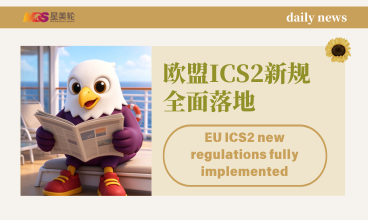
EU ICS2 new regulations fully implemented
The EU’s second-generation Import Control System (ICS2) will be fully and mandatorily implemented on September 30, 2026.
Learn more> >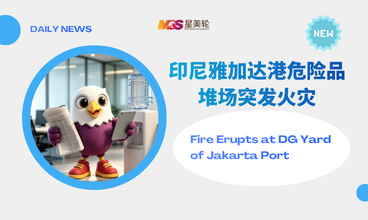
Fire Erupts at DG Yard of Jakarta Port
Fire at Jakarta Port DG Yard, 52 Containers Damaged
Learn more> >
New Dangerous Goods Export Regulation Takes Effect at Shanghai Port, China in September
The new maritime inspection rule for dangerous goods exports is firstly enforced at Waigaoqiao Terminal of Shanghai Port, China. The audit basis shifts from UN code verification to full cargo name filing.
Learn more> >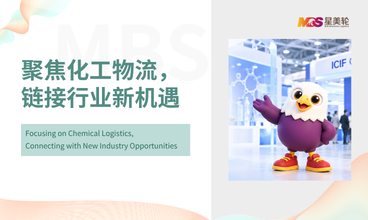
MBS丨Focusing on Chemical Logistics, Connecting with New Industry Opportunities
MBS participated in the 23rd China International Chemical Industry Fair (ICIF China 2026).
Learn more> >Consultation & Suggestions
If you have logistics consulting or cooperation intention, please leave your message here,
or put forward your valuable comments or suggestions, we will contact you at the first time.